Meet Anna Reyes, LCSW
– Somatic Therapist NYC
Ready to embody your power instead of performing it? I offer therapy for people who’ve had to abandon themselves to belong.
Relational and Somatic Therapist NYC
Somatic therapy for queer and BIPOC adults ready to reclaim the confidence, clarity and courage that was always theirs.
My Approach to Therapy is:
-
Let’s face it - American society was founded on anti-Black racist beliefs that harm all people of color / the global majority. I believe that anti-Black racist beliefs perpetrate harm from micro- to macro-levels: from person to person, within our communities, within our workplaces and educational institutions, how they are baked into and enacted through legal policy, and even the beliefs we’ve internalized about ourselves.
I am committed to the life-long learning of anti-racist practice and unlearning of white supremacist implicit biases and beliefs. In the therapy room, this means I’m critically investigating how power, identity, and implicit biases may be showing up or impacting our work.
-
Sexuality feels like a taboo subject to many, even in the therapy room. I view each person’s experience of their sexuality as uniquely their own, and an integral part of being human.
I approach talking about sex in an open, non-judgmental, and inclusive way, and believe that exploring sexuality can be a window into unspoken wounds, deep relational desires, and that fantasy offers your mind-body’s creative solutions to healing those wounds and fulfilling your needs.
-
Through both training and my work with those who have experienced severe, big T trauma (sexual assault, childhood abuse and neglect, for example), I have learned that the impact of trauma can shape almost all parts of your life - beliefs about the world and yourself, to how you feel in your body, to even how you experience time.
I understand how to work with and improve post-traumatic symptoms, such as depersonalization, panic, or hypervigilance. I also understand how to approach your care in a way that honors your experiences with compassion, does not push you anywhere your system isn’t ready to go, and cultivates your sense of agency and efficacy.
-
I see gender identity and expression as a spectrum that is highly individual to each person, and recognize that trans and non-binary people have always faced very real threats to their safety, rights and personhood that are alive and well today.
As a cis-gender provider, I believe that continually educating myself re: the trans experience is an ethical responsibility, I also believe that naming power dynamics in the therapy room is an important step to establishing psychological safety and trust.
More About Me

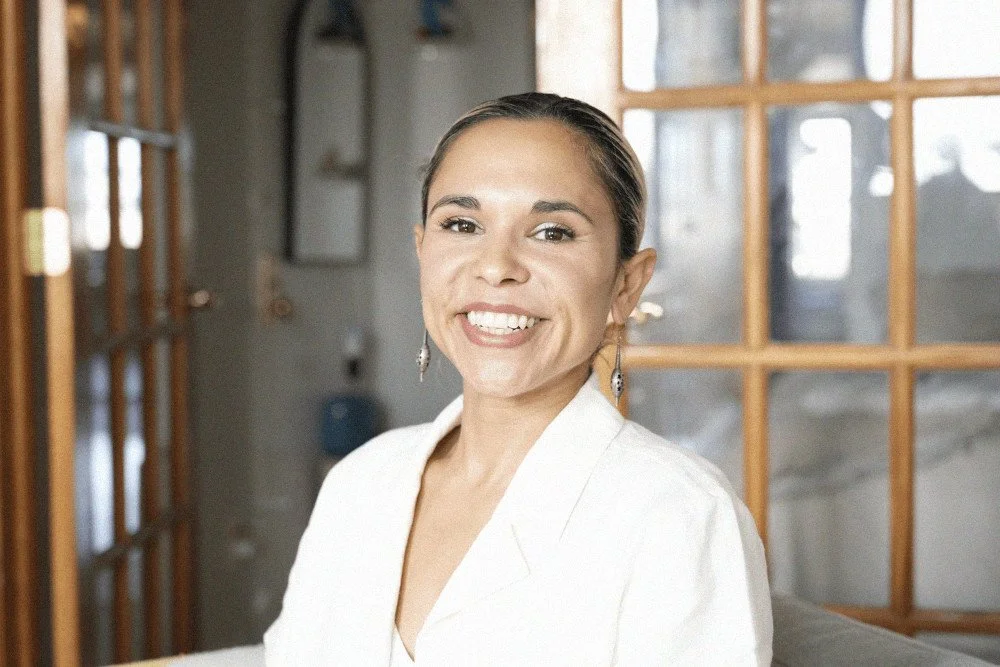
Anna Reyes, LCSW - Somatic Therapist NYC (photo: Ron Chau)
Although I didn't know it at the time, my path to becoming a somatic therapist began with a career in dance. After receiving my BFA in Dance Performance at The Boston Conservatory,
I performed, choreographed, taught dance, and worked as a freelance personal trainer throughout Boston, NYC, and Austin. Throughout my artistic career, I grappled with how to continually hone my technique and develop my voice from a compassionate, curious place inside of me — as opposed to the rigid, perfectionistic, sometimes inhumane standards the dance world can hold.
After graduate school, I worked in hospital systems in New York City: first in the Comprehensive Psychiatric Emergency Program at New York Presbytarian/Weill Cornell, then as a primary care social worker at Mount Sinai's Adolescent Health Center, providing ongoing therapy to low-income, Black and brown, and queer-identifying young New Yorkers. The emergency room revealed itself quickly as a poor fit — I wanted to work slowly, equitably, intentionally and instead found myself as a catch-all for a broken mental health and housing system. The primary care role felt far more aligned, and it deepened my clinical voice in ways I'm still drawing from.
But even there, I didn't find the ease I'd imagined. I burned out juggling 90-minute suicide risk assessments alongside slow, somatic sessions — my body calcifying with stress while
I tried to give clients the kind of unhurried, attuned care that actually heals. And then, as the second Trump administration commenced, the care we provided came under direct threat. We gathered in worried all-staff meetings, grappling with how to continue providing gender-affirming care to trans youth and comprehensive reproductive healthcare. Systems that once felt immovable revealed themselves as frighteningly flimsy.
Private practice is both my answer to that disillusionment and my commitment to doing this work differently. I provide deeper, higher-quality care when I follow my body's rhythms, work with who I'm called to work with, and structure my time in ways that sustain me. The artist in me — whose appetite for honing technique is insatiable, but trusts that technique only matters in service of attunement, compassion and play — needs that freedom to do this well.
I believe that as a therapist and artist, my work is to courageously seek and express truth alongside my clients — truth that is dangerous to oppressive systems, and life-affirming for the people I serve.
-
New York State Licensed Clinical Social Work, License #099574, present, exp Jan 2028
New York State Licensed Master of Social Work, License #113666, present, exp Aug 2026
Accelerated Experiential Dynamic Processing Immersion Course, AEDP Institute, Jan 2024
Healing Relational Trauma: Tailoring Treatment to Presenting Attachment Styles – March 2019, New York, NY
Esther Perel’s Live Sessions: Mating in the Metacrisis — April 2025, New York, NY
Esther Perel’s Live Sessions: The Masculinity Paradox – November 2018, New York, NY
-
Silberman School of Social Work at CUNY Hunter, MSW in 2021
The Boston Conservatory, BFA in Dance Performance in 2011
-
These days, you can find me dancing in my living room or practicing footwork on the subway commuting home.
I adore my cat Nandor, whose namesake is from What We do in the Shadows, because like the vampire, he is also dominant and clumsy, yet very lovable.
I love spending time by water (whether a pool or a beach) and am a frequent exerciser and meditator.

Somatic Therapist NYC
Finding the Right Fit
We’ll be a great fit for therapy if you:
Are interested exploring and understanding how emotions show up in your body
Tried talk therapy before, and even though you understood yourself better, you didn’t actually feel much different
Are curious about how early experiences in life shaped both your survival strategies and inherent strengths
Are ready to gain a deeper understanding of how both small and major traumas have impacted you today and what to do about it
We might not work well together if you:
Are exclusively interested in talk therapy or prefer very structured therapy
Primarily want career coaching
Are in crisis and need intensive support (such as engaging in risky behaviors, i.e. suicidal gestures or planning)
Have recently been admitted to an inpatient psychiatric program
Don’t feel ready to explore and process past difficult experiences
Ready to Begin?
Book a free 15-minute consultation call –
no commitment, just a conversation.