Growing up Biracial: Bagels, Tortillas, and Selena
Part 2 of Dreaming of You: How Selena Brought Me Home to Myself
Growing up biracial in a primarily white, Christian community complicated my relationship with my Mexican heritage. This is part two of a four part series, and the story of how revisiting how Selena Quintanilla and her legacy helped shaped my pride in being Chicana.
If you’re A) looking for BIPOC therapist and B) any of this lived experience resonates with you - I’d love to support you. Reach out for a free consult call. Ok — story below.
Bagel vs. Tortilla
I can imagine a reader asking themselves, "What was going on in your home? Were your parents somehow counteracting this racism, letting you know just how beautiful Mexican heritage and brown skin is?" I'd answer both yes and no. I'm biracial, with a dad raised Catholic in Mexico and who moved to the states in adolescence, and a white, Jewish mom who grew up in Michigan (with Eastern European heritage on both sides, whose family came over to escape religious persecution). The dynamic between my parents and me, as well as their dynamics with their own families, helped shape a sense of pride in my elementary school years in being “different” through being Jewish, especially in our very Christian community. (Side note, which feels somewhat superfluous to include but important nonetheless: I’m not religious in any way now, and have never identified as Zionist. Free Palestine.)
Relationally, my mom was closer to her side of the family than my dad was to his. This meant that, in practice, my sister and I grew up celebrating Jewish holidays with the maternal side family far more often than we did celebrating Christmas or Easter with our dad's side of the family. I have really fond memories of eating my Grandma Fae's matzoh ball soup at Passover, and conspiratorially giggling as my mom and her two brothers poked fun at how clumsily my Grandpa Morrie led the seder.
As I approached 11 years old, my parents and I discussed if I wanted to have a Bat Mitzvah. Out of a vague sense of eldest-daughter-fueled-responsibility (and probably anticipating guilt if I chose not to), I decided to go for it. I'm not sure I would have made that decision if I'd known how torturous Hebrew tutoring would feel as I crammed for my Bat Mitzvah to make up for a history of incredibly spotty Synagogue attendance (a few times a year at best).**
** Maybe choosing to get Bat Mitzvah'ed could have been predicted, as my parents have recited this family lore many times: when I was an infant, they jokingly put a bagel and tortilla in front of me on the plastic table attached to my high chair, just to see what I'd go for. I grabbed the bagel, but hard to know if this was a culturally specific gluten preference or simply the appealingly bulbous shape for a toddler's fingers to practice her complex motor skills around."
Pretend Spanish
Counter to the proximity and closeness I felt with Jewish traditions growing up, I simultaneously felt distant from my Mexican heritage. My dad, one of six siblings, materially achieved the American dream: he grew up very poor, often without basic needs, like enough food, heat, or beds for the family. He came to the US with his father, an incredibly old-school and stubborn man, so that his dad could establish work and an income without being alone before the rest of the family could join them. For my grandfather, like many old school Latiné fathers, the word "respect" was synonymous with "obey," which ultimately led my also-stubborn dad to move out as a teenager, fed up with stringent curfews and very little freedom as he rebelled against his father and assimilated into American adolescence. His resource-scarce upbringing ultimately fueled his individual ambition, as well as a sense of financial responsibility for our family. After meeting my mom in social work school, he pivoted into law, and ultimately ran his own law firm in Austin, a career that burnt him out, caused frequent migraines, and also funded for our upper middle class life in Barton Creek West. My sister and I grew up speaking only English, however as little kids we’d pretend that we could speak Spanish, which entailed speaking Spanish-sounding gibberish to each other, pausing every 8 seconds to say, "pretend I just said __insert whatever our gibberish meant in English_'".
I do have memories of my mom telling my sister and I how beautiful we were, inside and out, and how much she loved the color of our skin. Her proclamations felt nice but also felt hard to believe; they likely weren't enough to counteract the white water we swam in. My mom herself dealt with second-hand micro-aggressions, questions like "Where did you adopt those beautiful babies from?" as she wheeled us around in her grocery cart at Randall’s.
Older Cousins & Claw Clips
Though my connection with my dad's side was less close and less tangible, it wasn't nonexistent. One of my favorite parts of spending time with my dad's side was seeing my cousins: Caroline (my age) and Kristen (several years younger) were fun to play with, while I both looked up to and was intimidated by the older ones. For example, my cousin Jessica, 3-4 years older than me, distinguished herself by being aloof, moody, and so cool. I loved her style and her effortless, androgynous nickname, Jess. I copied how she piled her hair back in a giant claw clip and left one asymmetrical lock of hair free, right next to her part, so it fell past her chin to frame her face.
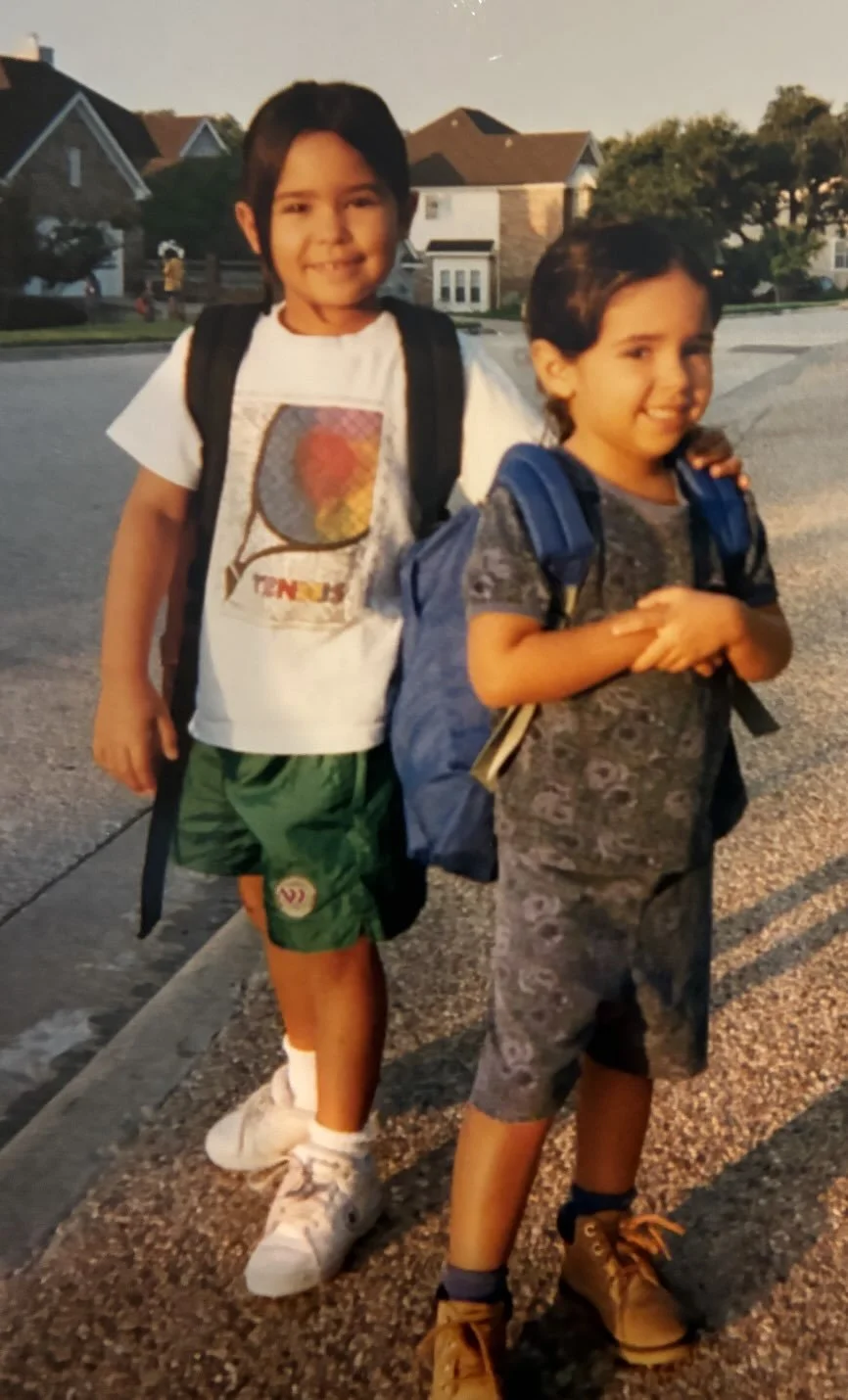
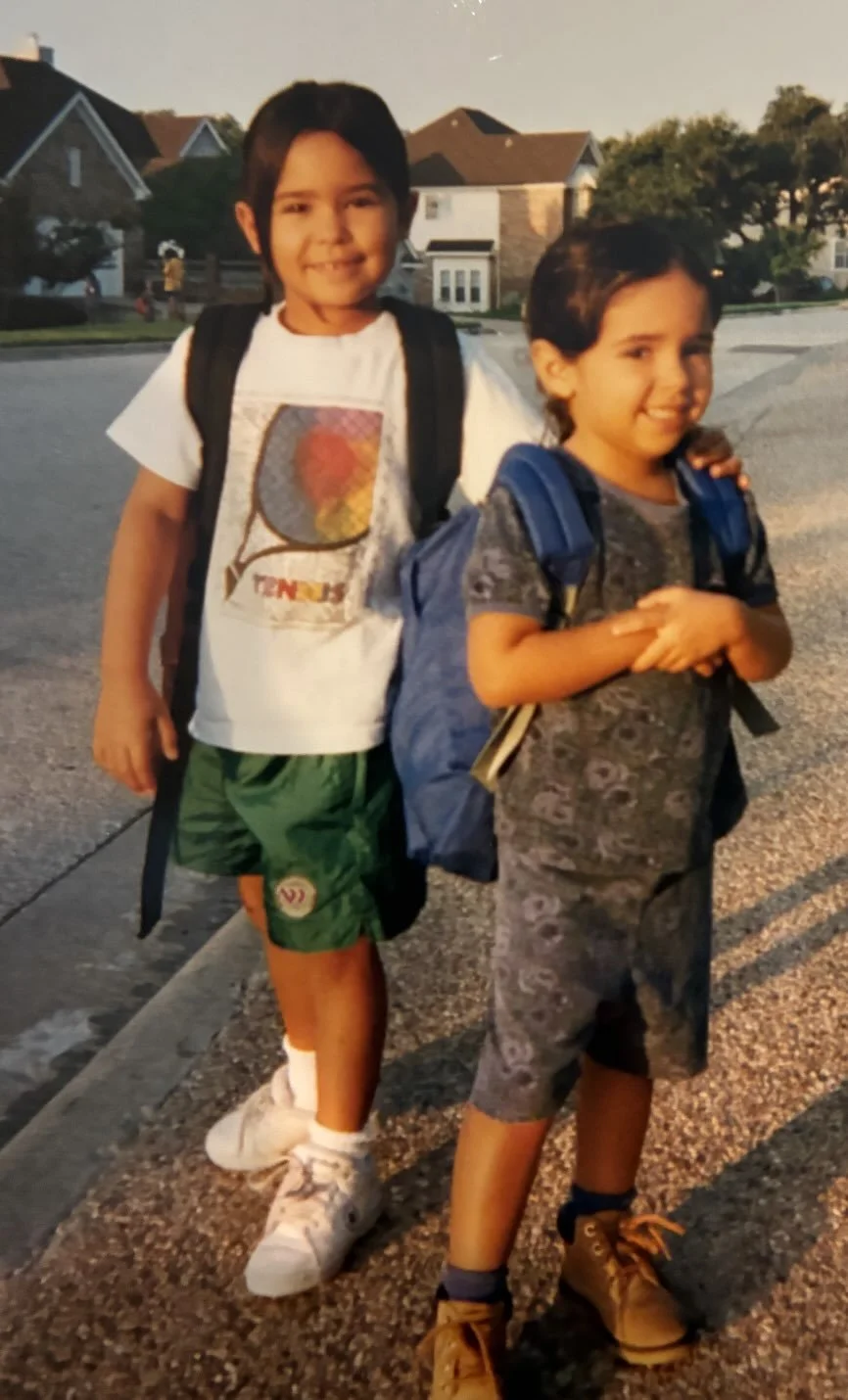
First Day of School (2nd grade / Kindergarden)
My sister and me: peak 1995 fashion, and my expert rendition of the Jennifer Love Hewitt tendrils on face, asymmetrical style
My even older cousin Cindy was also super cool, but differently than Jess. She was about 10ish years older than me, so didn't need to differentiate herself as older and more mature like Jess did. Cindy played well with me and my sister. She and her mom, Aunt Martha, had a really funny, feisty side to them that felt familiar, the same kind of teasing family culture that I loved on my mom's side.
A Voice I Wanted
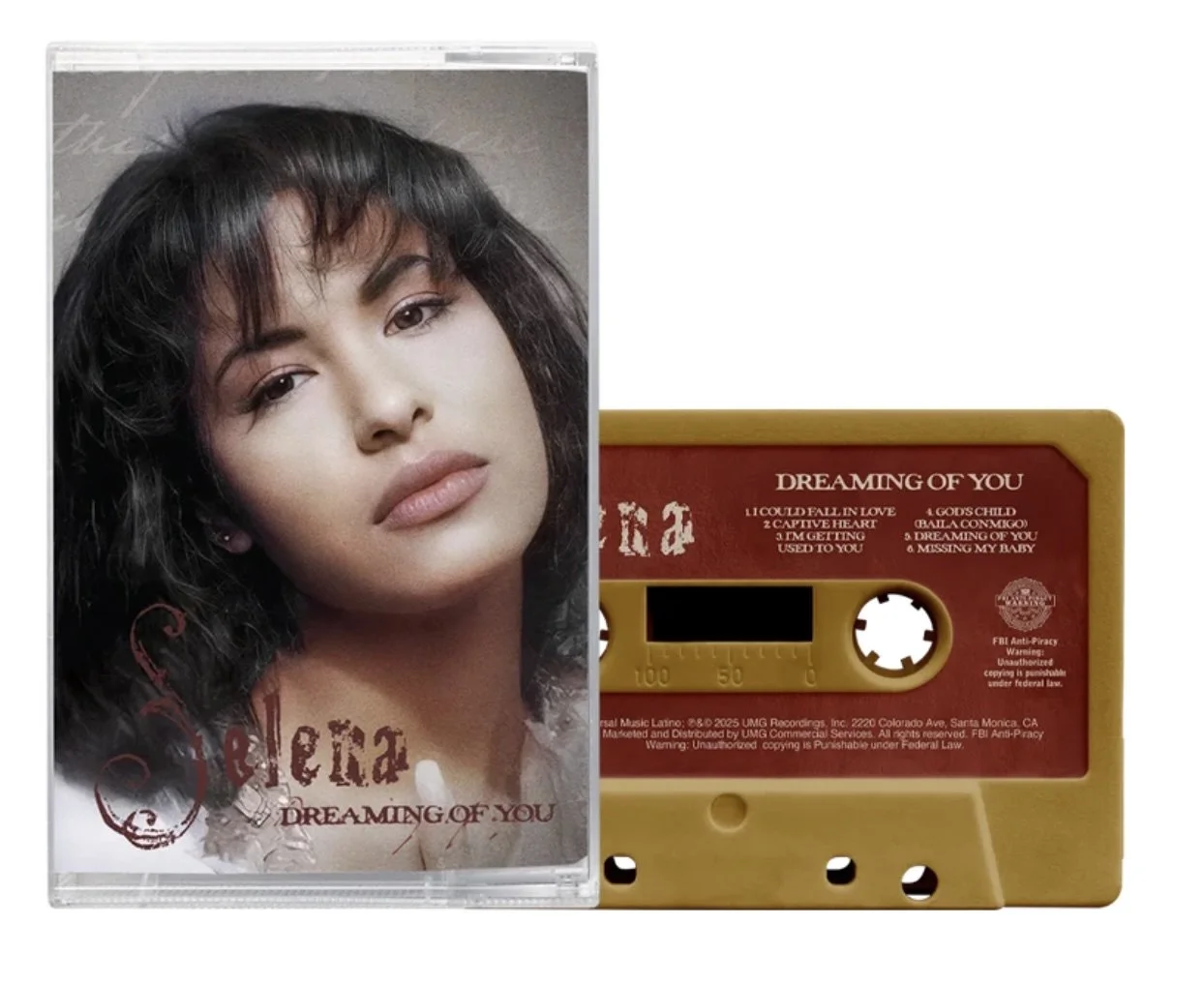
But THE singular thing about Cindy that impressed me most was her incredible voice. When they visited, she'd sing while my mom played piano. I'd watch in awe of the full, gorgeous tone and the clear, creative riffs she'd improvise. I don't remember who originally introduced me to Selena, or how I knew to ask my parents to get me her tape, but I do remember linking my cousin's Cindy voice with Selena's voice somehow, that somehow Mexican heritage and incredible voices were correlated. I wanted to sound exactly like both of them, and being a singer was the first thing I ever wanted to be when I grew up.
I don't have specific memories of how I thought of Selena around the age I was listening to her music, other than thinking her bejeweled bras were incredibly stylish and feeling heartbroken when she was murdered. The biggest felt-sense memory I can identify: that she felt like something I wanted to be, but inherently different, "other" than me. I knew she sang in Spanish a lot, so I assumed she grew up in Mexico. Rarely, I’d hear her last name, Quintanilla, which solidified a sense of unfamiliarity. My own last name, Reyes, was only familiar because it was mine, but Quintanilla - this felt foreign against a sea of the other last names that felt familiar: Smiths, Powells, Rutledges, Breckenridges, Hayes.
Next week - Part 3!
Read more about Somatic Therapy: